


Graduate Students


Why Study the Environmental Humanities?
The EH program trains the next generation of environmental thinkers and leaders towards building more just and equitable environmental futures. This fully-funded master's program offers an innovative interdisciplinary, research intensive, and community engaged curriculum designed to give students the skills they need to build meaningful solutions to a range of complex environmental and social issues. Our students use scholarly and creative forms to study climate change, ecologies, toxicity, Indigenous Lands protection, environmental justice, the atomic west, air quality, water, energy transitions, and more.
Stay Informed


-

Faculty Feature: Thomas Michael Swensen
Get to know Thomas Michael Swensen: an EH faculty affiliate blending Native American history, punk culture, and Environmental Humanities.
-
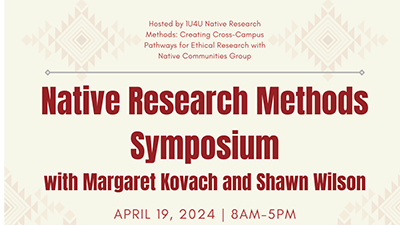
Native Research Methods Symposium
Join the 1U4U Native Research Methods: Creating Cross-Campus Pathways for Ethical Research with Native Communities Group for an all-day symposium on April 19th from 8 am - 5 pm featuring Dr. Margaret Kovach, and Dr. Shawn Wilson.
-
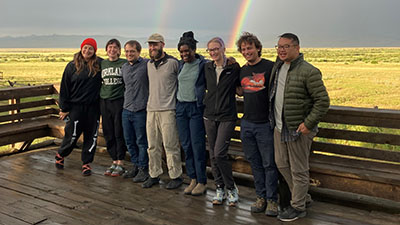
Environmental Humanities Spring24 defenses
We're in defense season, one of the best times of the year!
-

An Evening with Muskan Walia
Join the University of Utah Environmental Humanities Program on March 28th as Muskan Walia, the Spring '24 Community Practitioner in Residence, shares her experiences and insights into environmental justice.






Nuclear Decolonization:Indigenous Resistance to High-Level Nuclear Siting
Danielle Endres
While research demonstrates how Indigenous populations have been disproportionately affected by the global nuclear production complex, less attention has been given to tactics that have successfully resisted such projects. Danielle Endres’s Nuclear Decolonization shifts the conversation around nuclear colonialism in important ways, offering an account of how the Western Shoshone, Southern Paiute, and Skull Valley Goshute peoples and nations prevented two high-level nuclear waste sites from being built on their lands.

Eden's Endemics: Narratives of Biodiversity on Earth and Beyond
Elizabeth Callaway
"In the past thirty years biodiversity has become one of the central organizing principles through which we understand the nonhuman environment. Its deceptively simple definition as the variation among living organisms masks its status as a hotly contested term both within the sciences and more broadly. In Eden's Endemics, Elizabeth Callaway looks to cultural objects - novels, memoirs, databases, visualizations, and poetry - that depict many species at once to consider the question of how we narrate organisms in their multiplicity."

Conrad and Nature: Essays
Jeffrey Mathes McCarthy (with Lissa Schneider-Rebozo and John G. Peters)
"Conrad and Nature is the first collection of critical essays examining nature and the environment in Joseph Conrad's writings. Together, these essays by established and emerging scholars reveal both the crucial importance of nature in Conrad's work, and the vital, ongoing relevance of Conrad's treatment of the environment in our era of globalization and climate change. No richer subject matter for an environmentally-engaged criticism can be found than the Conradian contexts and themes under investigation in this volume: island cultures, colonial occupations, storms at sea, mining and extraction, inconstant weather, ecological collapse, and human communities competing for resources."

Gestures of Concern
Chris Ingraham
In Gestures of Concern Chris Ingraham shows that while gestures such as sending a “Get Well” card may not be instrumentally effective, they do exert an intrinsically affective force on a field of social relations. From liking, sharing, posting, or swiping to watching a TED Talk or wearing an “I Voted” sticker, such gestures operate as much through affective registers as they do through overt symbolic action. Ingraham demonstrates that gestures of concern are central to establishing the necessary conditions for larger social or political change because they give the everyday aesthetic and rhetorical practices of public life the capacity to attain some socially legible momentum. Rather than supporting the notion that vociferous public communication is the best means for political and social change, Ingraham advances the idea that concerned gestures can help to build the affective communities that orient us to one another with an imaginable future in mind.

The Ecological Rift
Brett Clark (with John Bellamy Foster and Richard York)
"Humanity in the twenty-first century is facing what might be described as its ultimate environmental catastrophe: the destruction of the climate that has nurtured human civilization and with it the basis of life on earth as we know it. All ecosytems on the planet are now in decline. Enormous rifts have been driven through the delicate fabric of the biosphere. The economy and the earth are headed for a fateful collision - if we dont alter course."

Routledge Handbook of Energy Democracy
Danielle Endres (with Andrea M. Feldpausch-Parker, Tarla Rai Peterson, Stephanie L. Gomez)
This handbook offers a comprehensive transdisciplinary examination of the research and practices that constitute the emerging research agenda in energy democracy. With protests over fossil fuels and controversies over nuclear and renewable energy technologies, democratic ideals have contributed to an emerging social movement. Energy democracy captures this movement and addresses the issues of energy access, ownership, and participation at a time when there are expanding social, political, environmental, and economic demands on energy systems. This volume defines energy democracy as both a social movement and an academic area of study and examines it through a social science and humanities lens, explaining key concepts and reflecting state-of-the-art research.
Utah Award in the Environmental Humanities
The Utah Award in the Environmental Humanities celebrates environmental leadership
and expression. It honors those who
solve the planet’s environmental problems using the tools of the humanities, such
as creative expression,
scholarly research, popular art forms and advocacy.
